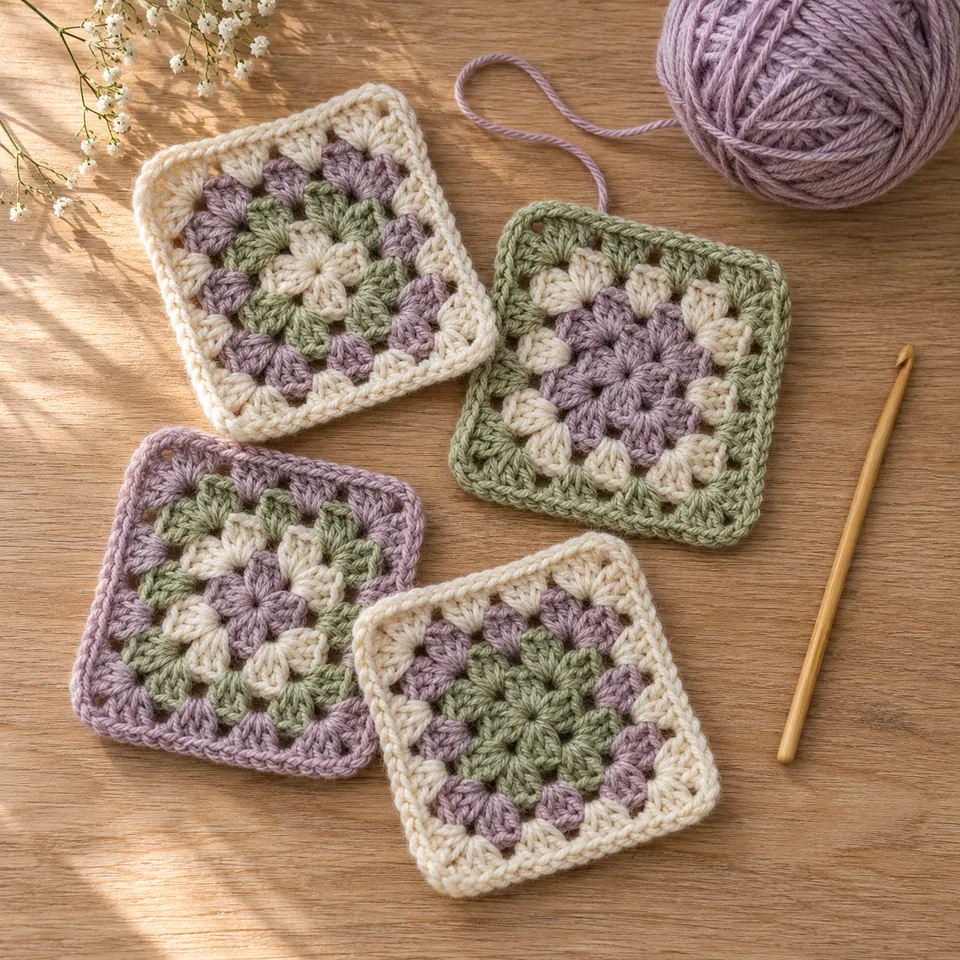
AI-generated crochet inspiration. This image is not a photograph of a tested project.
Crochet instructions become easier to read when the abbreviations feel familiar. Homecromade uses US crochet terminology. Always check the terminology note in any pattern you follow: a familiar stitch name can mean a different stitch in another system.
Read the pattern’s own glossary first
A designer may define a special stitch, a repeat, or a construction term specifically for that project. Read those notes before beginning. A general glossary helps with common language, but the project’s definitions explain how its particular instructions work.
A short list to keep beside you
| Abbreviation | US meaning |
|---|---|
| ch | Chain |
| sl st | Slip stitch |
| sc | Single crochet |
| hdc | Half double crochet |
| dc | Double crochet |
| st / sts | Stitch / stitches |
| yo | Yarn over |
US and UK names need attention
For example, US single crochet is called double crochet in UK terminology, while US double crochet is UK treble crochet. Do not simply match the letters without identifying the system. If a pattern is unclear, look for its terminology statement or ask its designer before starting.
Look for repeats and stitch counts
Brackets, parentheses, and asterisks help group actions, but their exact use should be explained in the pattern. Read the whole row first. Then locate where the repeat begins, where it ends, and how many times it should be worked. A stitch count at the end gives you a checkpoint before moving to the next row.
Turning chains are a pattern decision
Do not assume a turning chain always counts as a stitch or never counts as one. Find the pattern’s instruction and apply it consistently. That decision affects where you place the first and last stitches and how you check your count.
Make a note when a term is new
Write the full instruction beside the abbreviation in your own notes, and highlight any exception the designer gives. Pause when something is unclear rather than repeating an uncertain row many times. Learning the language a little at a time is part of learning the craft.
Reference: Craft Yarn Council’s US crochet abbreviation reference. This article explains how to read terminology; it is not a stitch tutorial or a project pattern.