
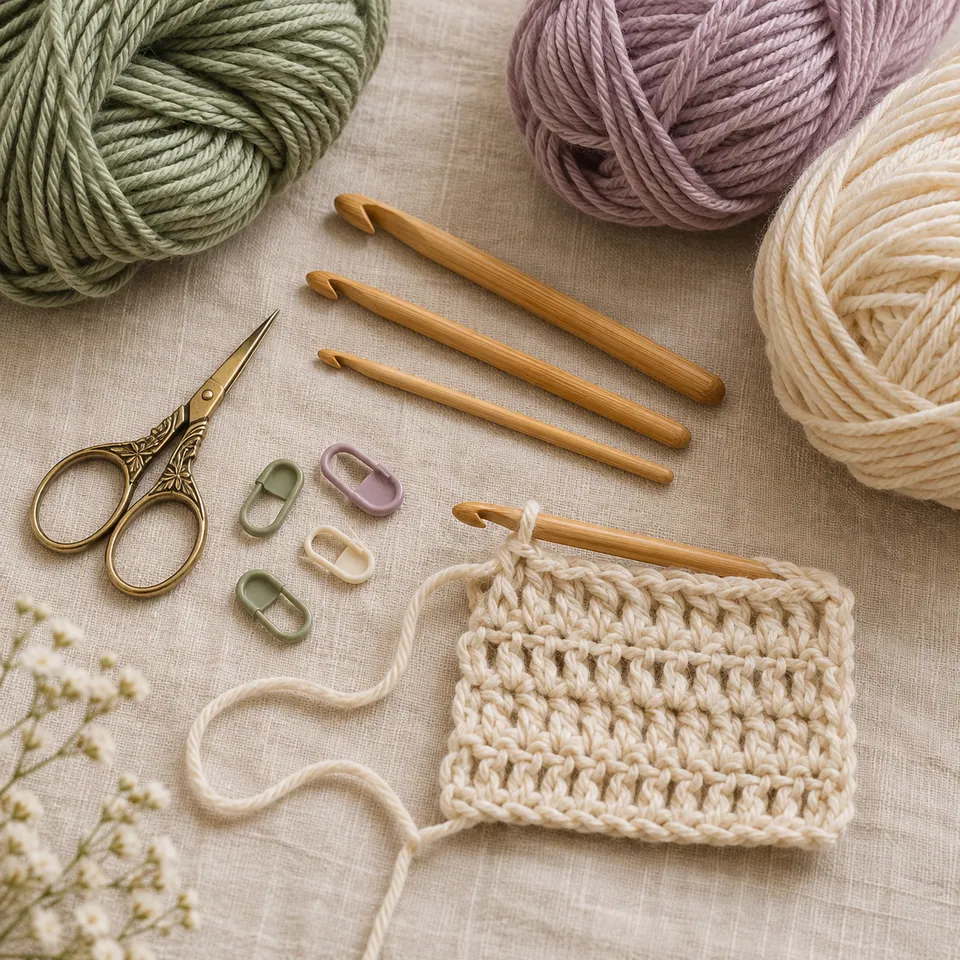
AI-generated crochet inspiration. This image is not a photograph of a tested project.
A yarn label is a small project-planning tool. It can help you compare skeins, calculate whether you have enough yarn, and decide how to care for the finished piece. Before throwing the label away, take a photo or keep it with your project notes.
Fiber tells part of the story
Look for the fiber content and any blend percentages. These help you understand what the yarn is made from, but two yarns with similar fiber content can still feel and behave differently. Construction, twist, and finishing also affect the fabric. If you are substituting yarn, make a real sample instead of relying on the ingredient list alone.
Weight means thickness here
A yarn’s weight category describes a range of thickness, while the number of grams or ounces tells you how much the skein weighs. These are different pieces of information. The Craft Yarn Council provides a standard category system, but a category does not guarantee that every yarn in it will produce the same gauge.
Compare length, not just skein count
Find the yardage or meterage on the label. Two skeins can have the same weight in grams and different lengths. When a pattern names a specific yarn, compare its total required length with your proposed substitute and consider how the different yarn behaves in the pattern stitch. A skein count alone is not a reliable substitution calculation.
Check shade and dye lot
The color name or number identifies the shade. A dye-lot number identifies a production batch, when the manufacturer uses one. If you want a uniform solid color across several skeins, look for matching lots and compare them in good light. Hand-dyed and intentionally varied yarns may call for additional handling described by their maker.
Treat hook suggestions as a starting point
A label’s suggested hook or gauge range offers guidance. Your chosen pattern’s gauge and the fabric you actually make are what matter for that project. Check a sample before committing to a fitted item or a carefully sized cover.
Save the care instructions
Follow the manufacturer’s care instructions for the yarn, and account for any other materials in the finished item. Keep a note to give with a handmade gift. If you combine yarns, check that their care needs are compatible before beginning.
Reference: Craft Yarn Council’s standard yarn weight system. The category and gauge information is guidance, not a replacement for the gauge required by your pattern.